
— Annie Dillard
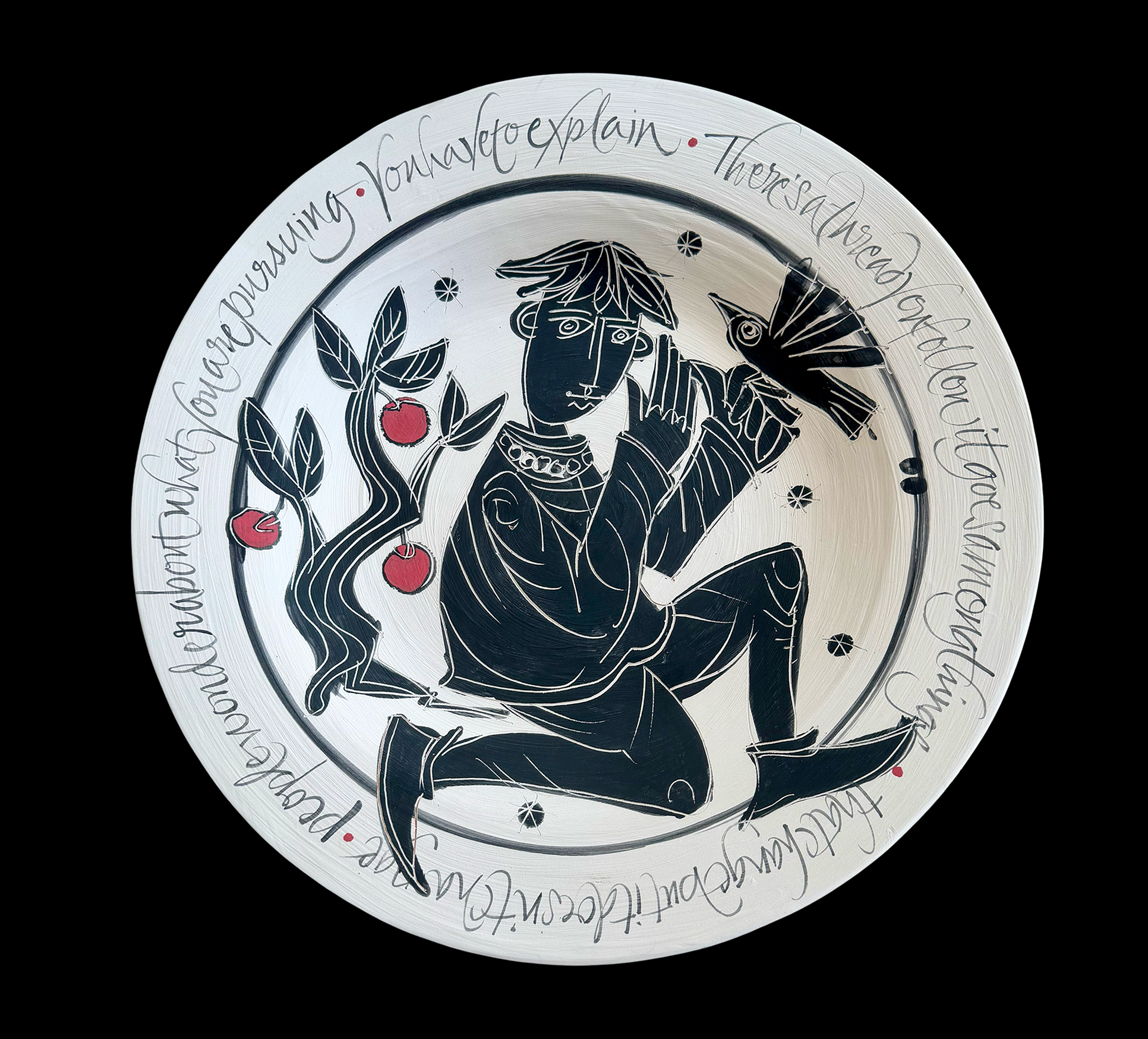
There’s a thread you follow | Ceramic bowl | © Martin Erspamer OSB & Laurie Doctor *(see note below about our coming exhibit)
More and more I have the sense of one day spinning into the next and the next— until now, this morning, summer’s gone, and it is the autumn equinox. For a brief moment days and nights are equal. For a brief moment I pause in the twilight. More and more I feel the need for a net, for the accountability of days filled with something that matters.
Up here on this small island called Madeline— named after Madeleine Cadotte, the daughter of an Ojibwe chief— the stars and even the milky way are visible. Last night the nearly full moon rose over the water. Immensity under the night sky and the vast silence re-ignite my desire to bow down before the miracle of being beneath this tower of darkness sprinkled with moonlight, to “labor with both hands at sections of time.”
How we spend our days is, of course, how we spend our lives.
What we do with this hour, and that one, is what we are doing.
A schedule defends from chaos and whim. It is a net for catching days.
It is a scaffolding on which a worker can stand and labor with both hands at sections of time.
— Annie Dillard
My heart is filled with the loss and examples of Annie Dillard and Wendell Berry— two literary heroes who followed their vision each day until the end— summoning the net of their days. Their nets gathered one upon another, stacking up with fidelity and devotion to a vision, now brimming with treasures left for us, in their absence. Reminding us that life is precious and time is short.
The 92 year old Chief Buffalo of the Ojibwe had no doubt about what it meant to labor with both hands. When the U. S. tried to push the Ojibwe out from their land on Madeline Island in the 1850s, the 92-year-old Chief Buffalo refused. He set out for Washington DC to face the president. He traveled by canoe, steamship and train. The trip took two and a half months. 92 years old! When he finally arrived, President Fillmore was not receptive. Chief Buffalo checked into a hotel and waited. There he spoke with members of congress who came to his aid. His determination and bold stand with President Fillmore saved their homeland. The treaty of 1854 protected Ojibwe land rights that continue to this day.
The Ojibwe came to Madeline Island around 1400— after a 500 year journey following a vision, a migration prophecy seeking a place where “food grows on water”. Following prophetic stopping places marked by signs, they arrived at Madeline Island and discovered the food that grows on water: wild rice. The ancient record that preserves this story describes the island as waiting for them, as if it had always been prepared. They named the island Moningwunakauning, meaning "home of the golden-breasted woodpecker”.
The faith it requires to follow a vision over centuries of time, the perseverance it requires to set out at 92 to face an unknown place, and a president who initially refuses to see you….. this is what is necessary to labor with both hands, this is what is necessary to hold steady in uncertain times.
Madeline Island is a place made for nets, for cultivating the habit of twilight. On this small island the sky and trees, the clouds and birds feel so near. The mist gathers above the grasses at twilight with dusk-colored lights hovering along the horizon.
Below are some book pages from our class on Madeline Island using drawing, writing, watercolor, collage and ink on paper:
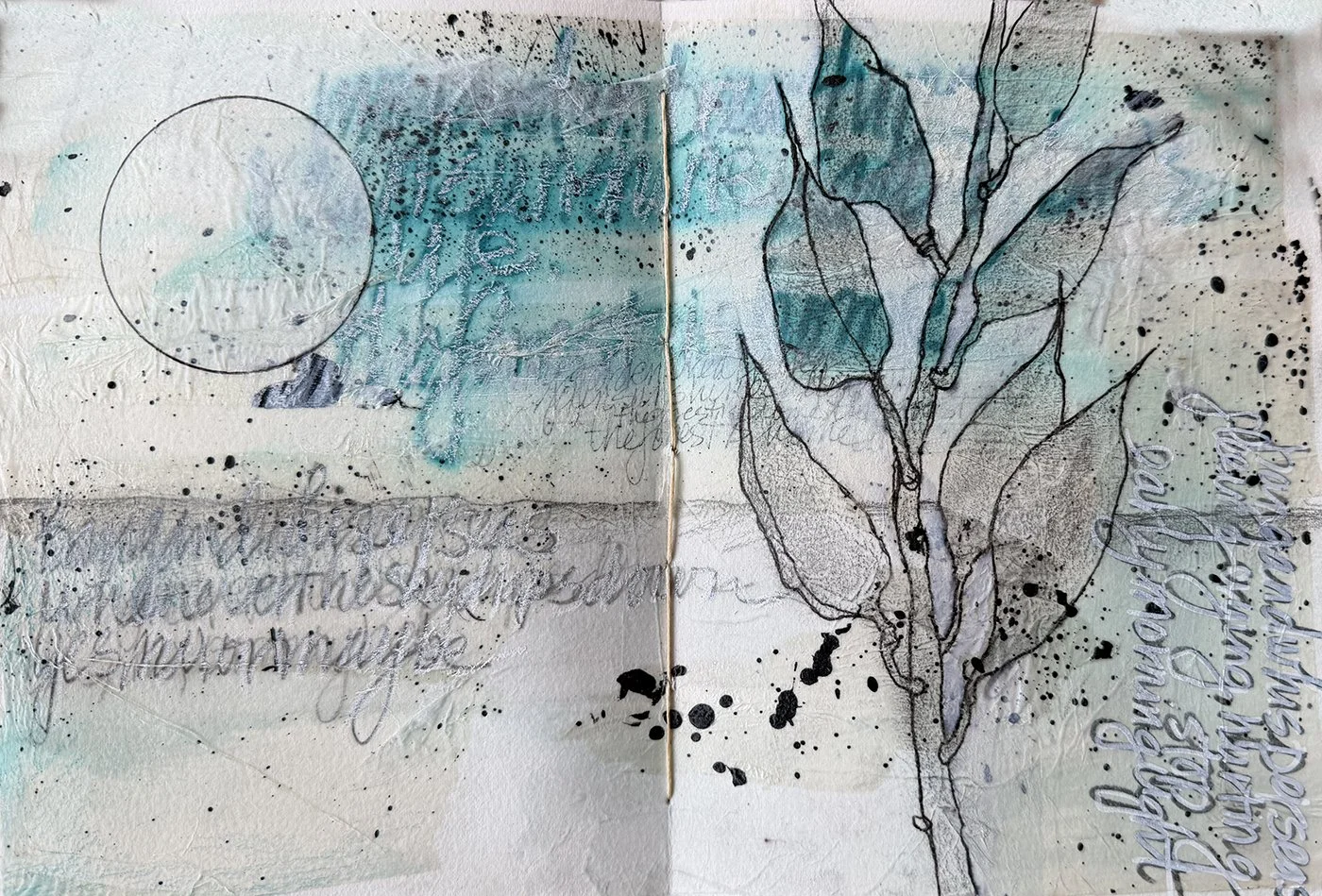
Habit of Twilight and Three Haikus | © Judith Bergerson
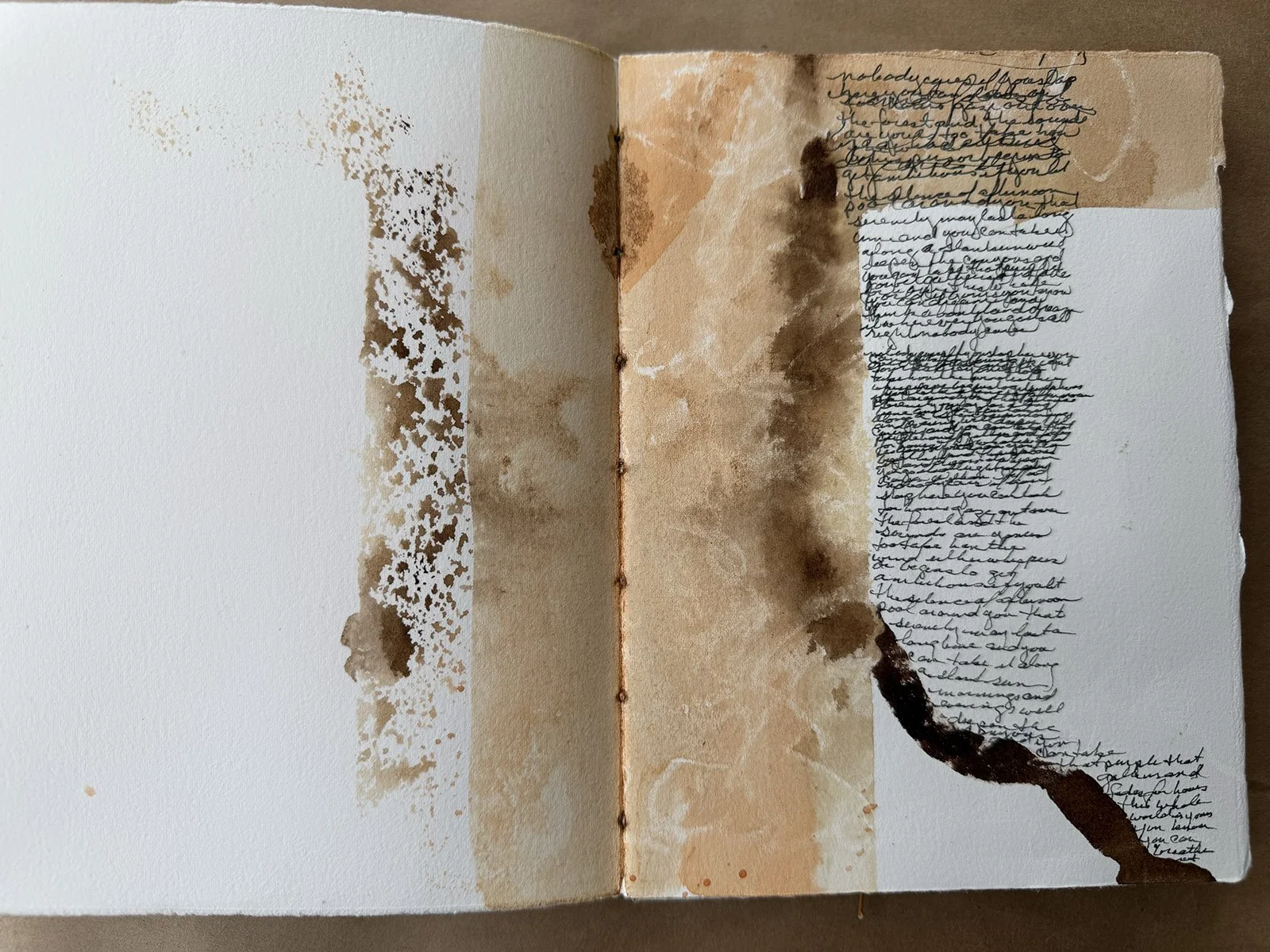
Book page | © Joan Neubauer
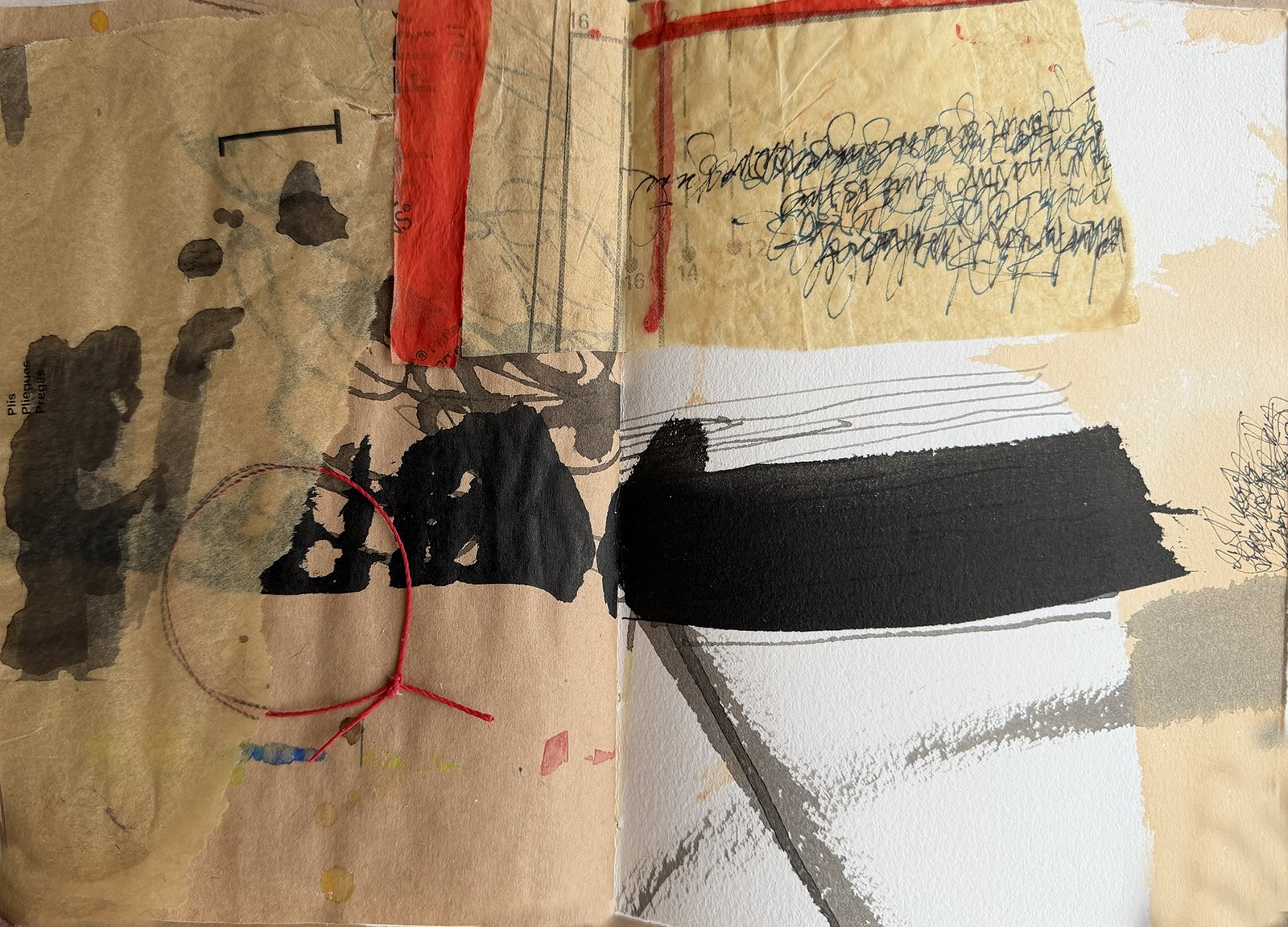
Book page | © Linney Wix
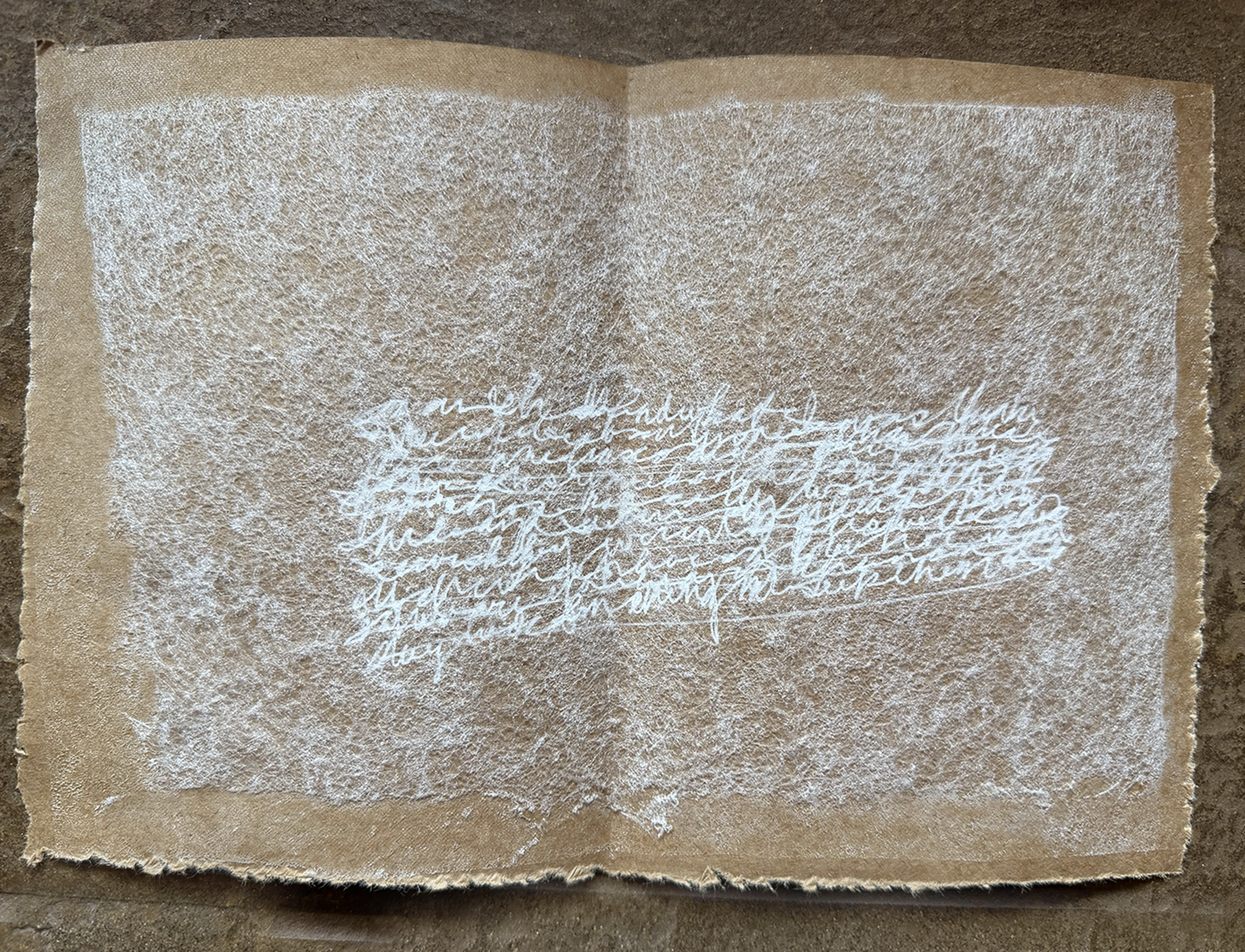
Book page | © Sue Flack
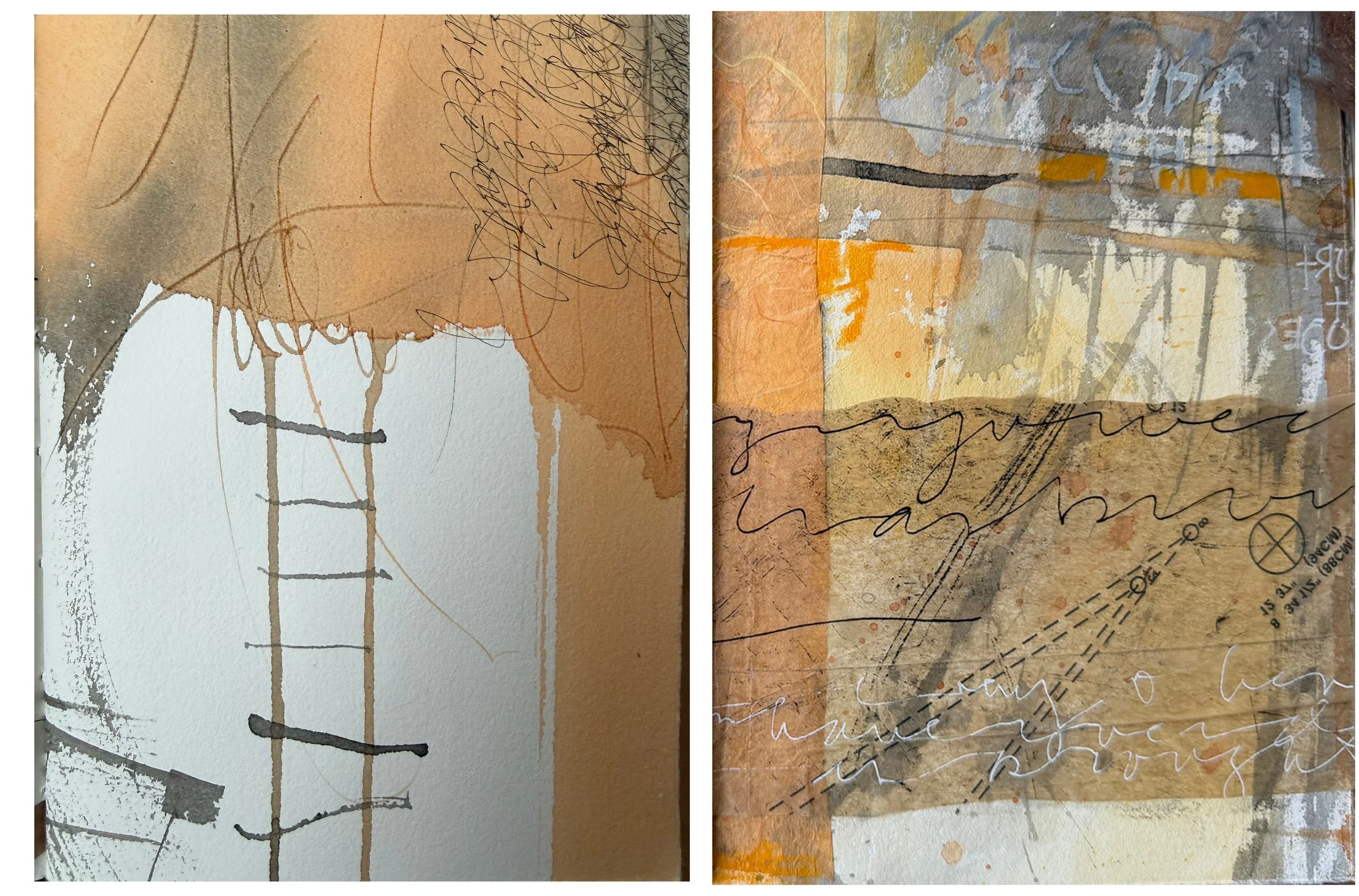
Book pages | © Linney Wix (left) © Deanne Persson (right)
It was pear and apple season on Madeline Island. My window overlooked a small orchard. I have never seen such red apples.
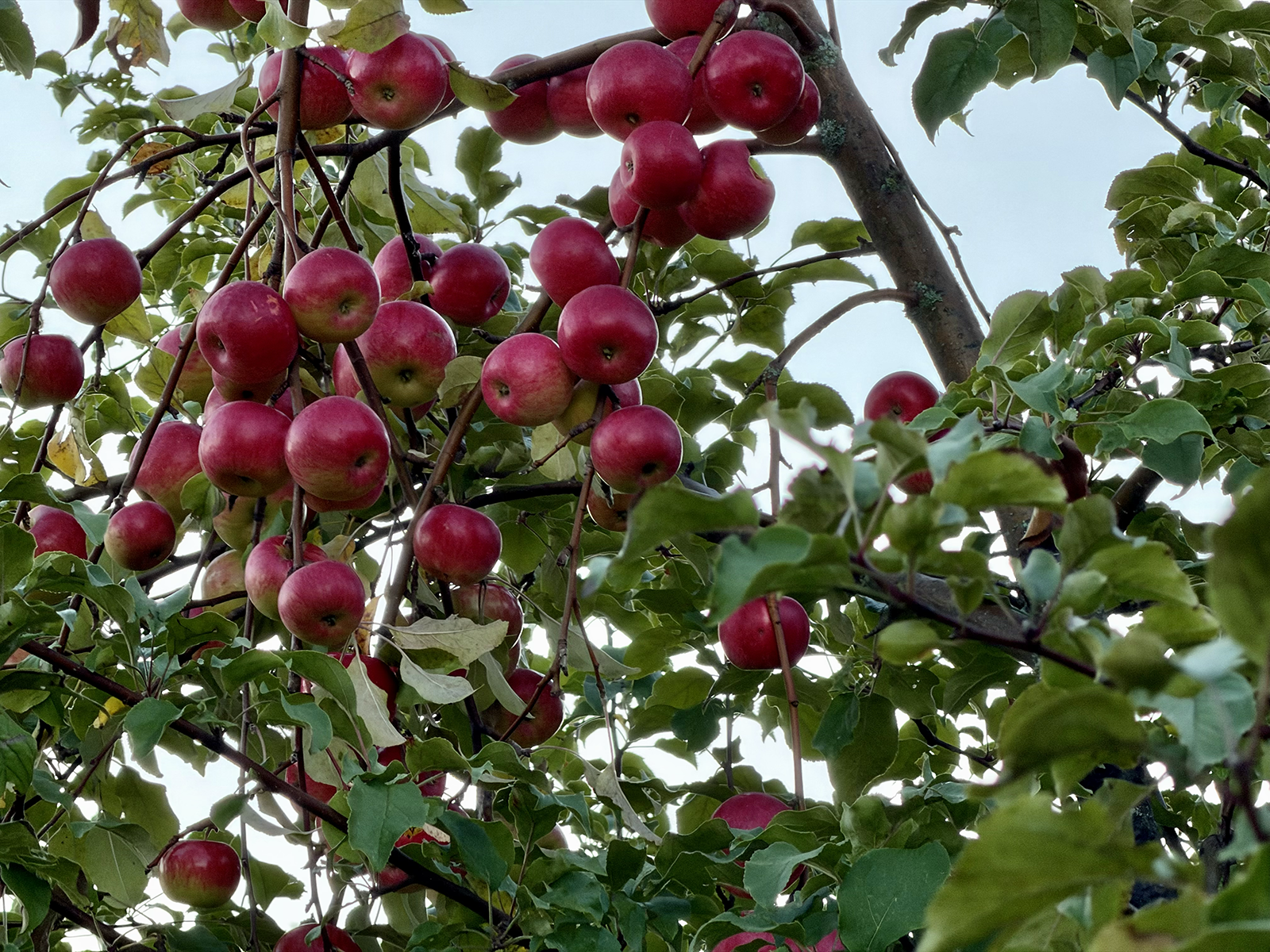
Apple orchard beneath my window at the Madeline Island School of Arts
We walked through the orchard and the tall grasses and did blind contour drawings of apples, pears, and leaves back in the classroom. Later we added watercolor.
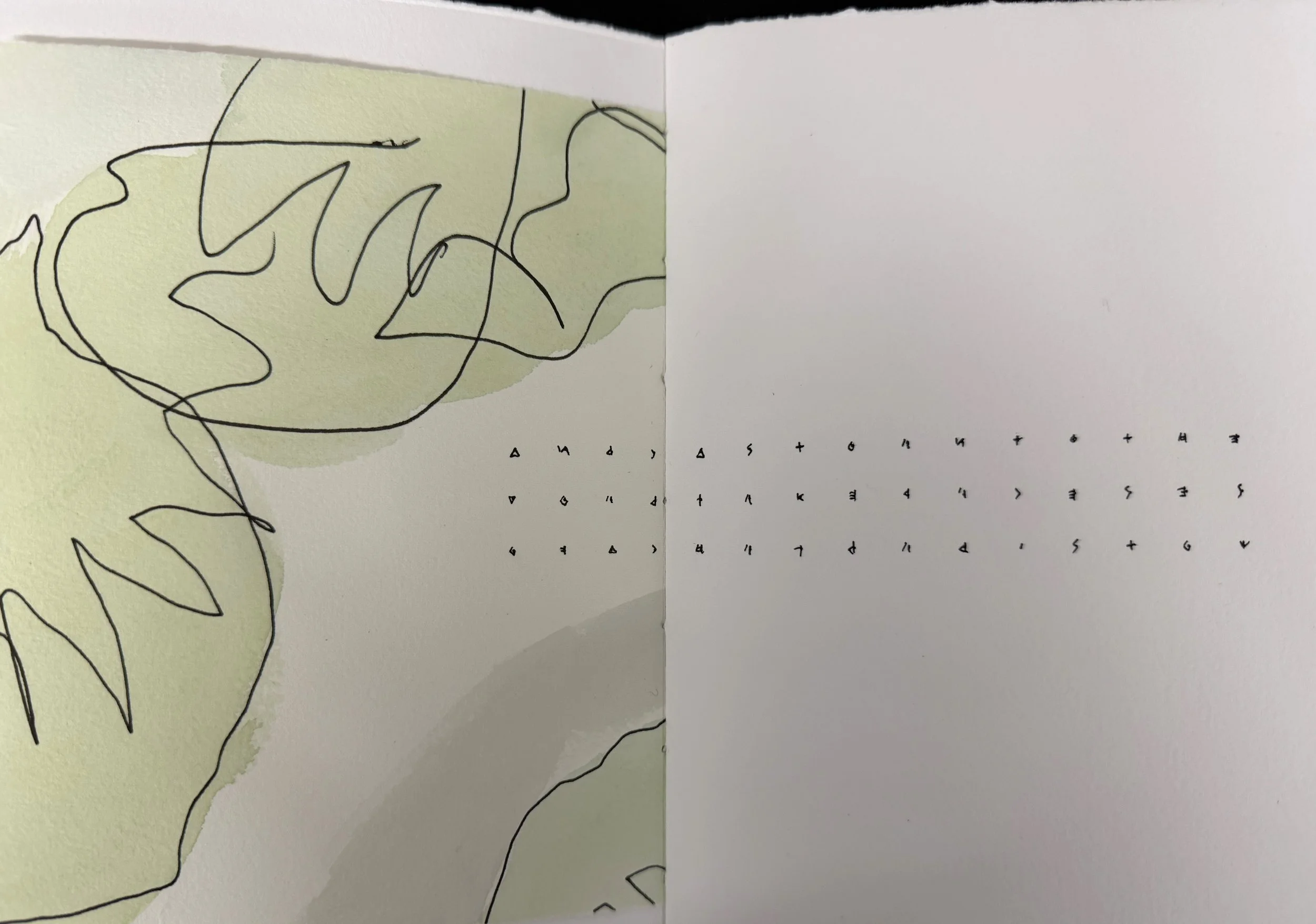
Writing tiny words in our “Greek” alphabet © Sue Flack
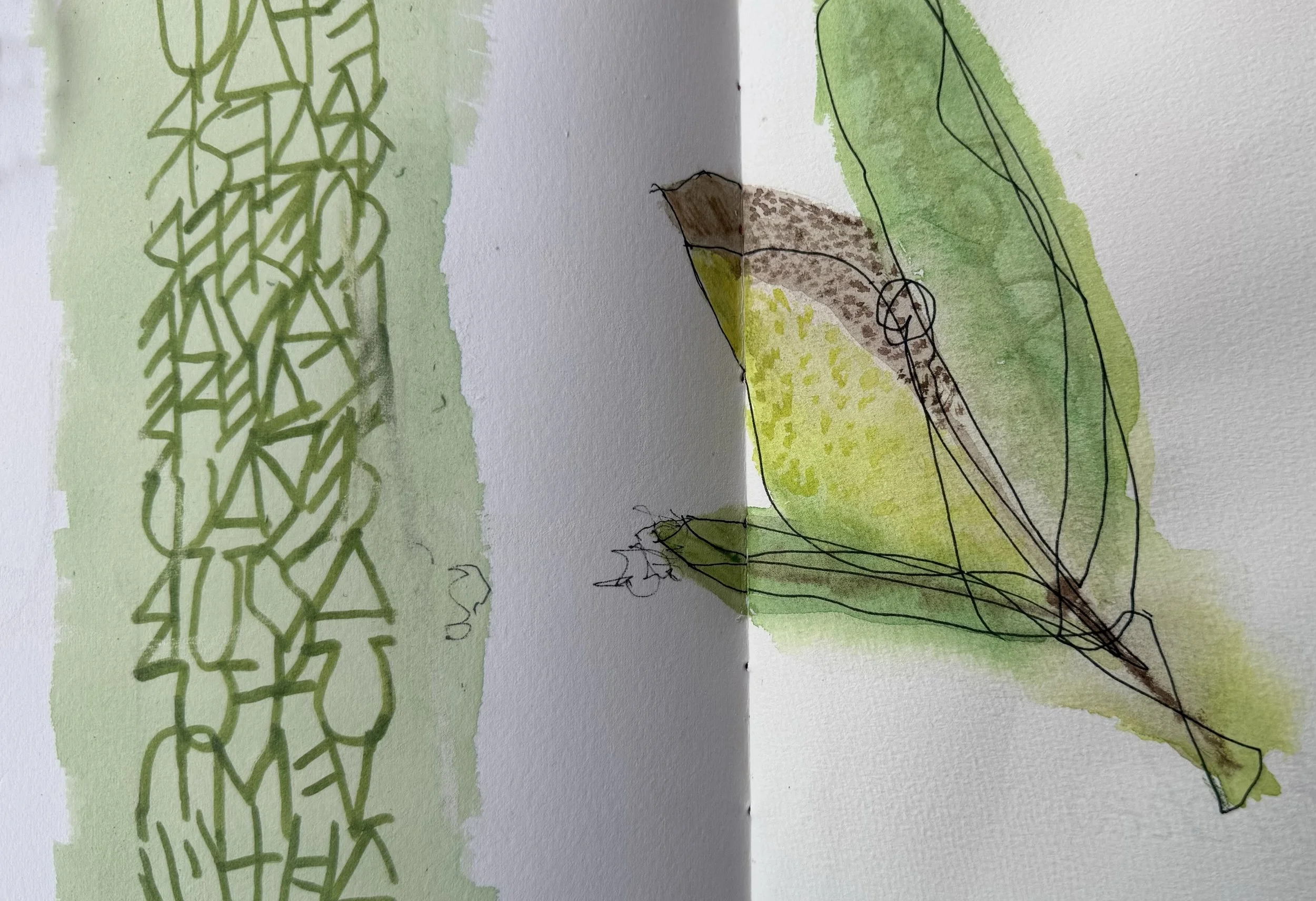
© Linda Betzner
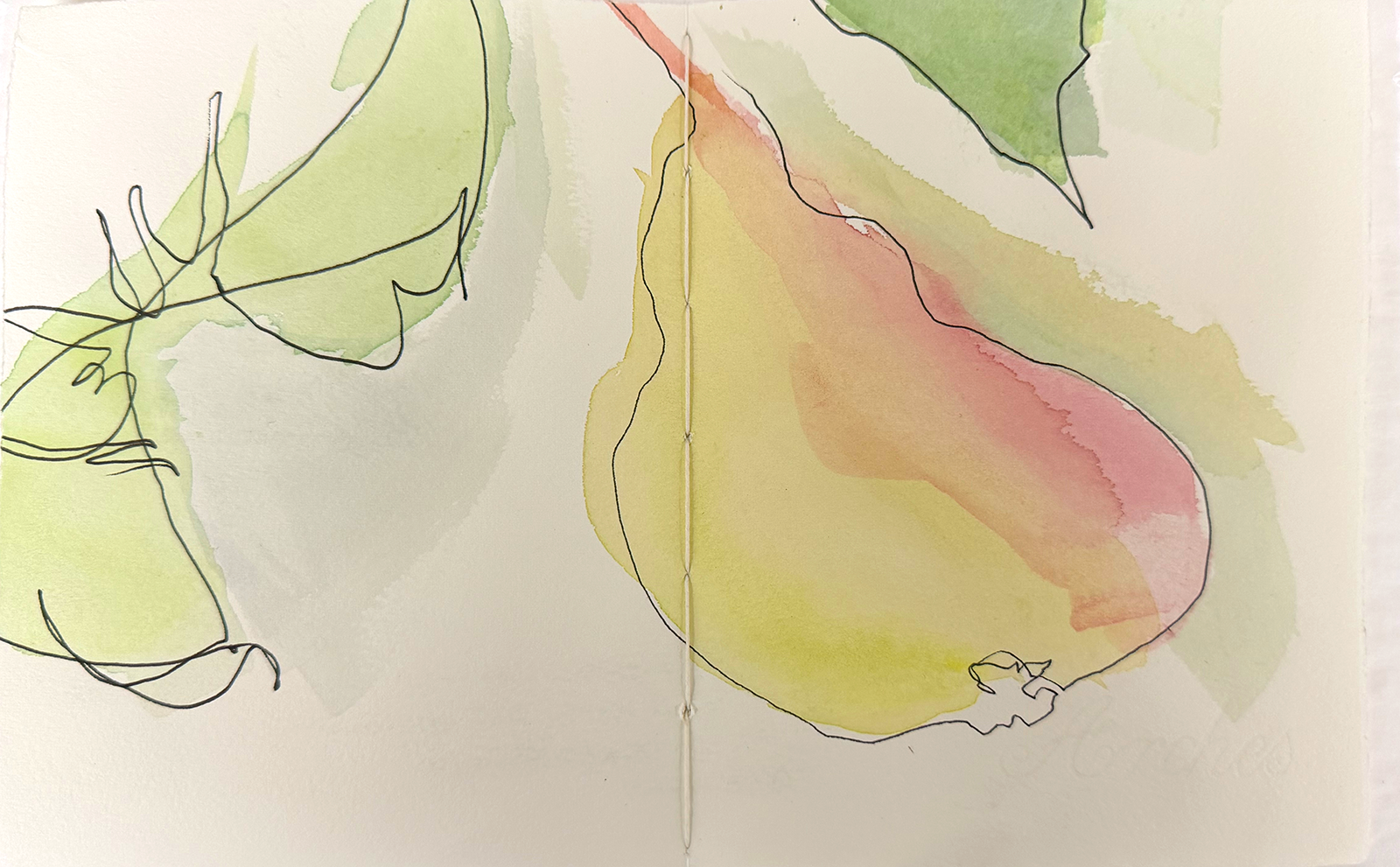
© Sue Flack
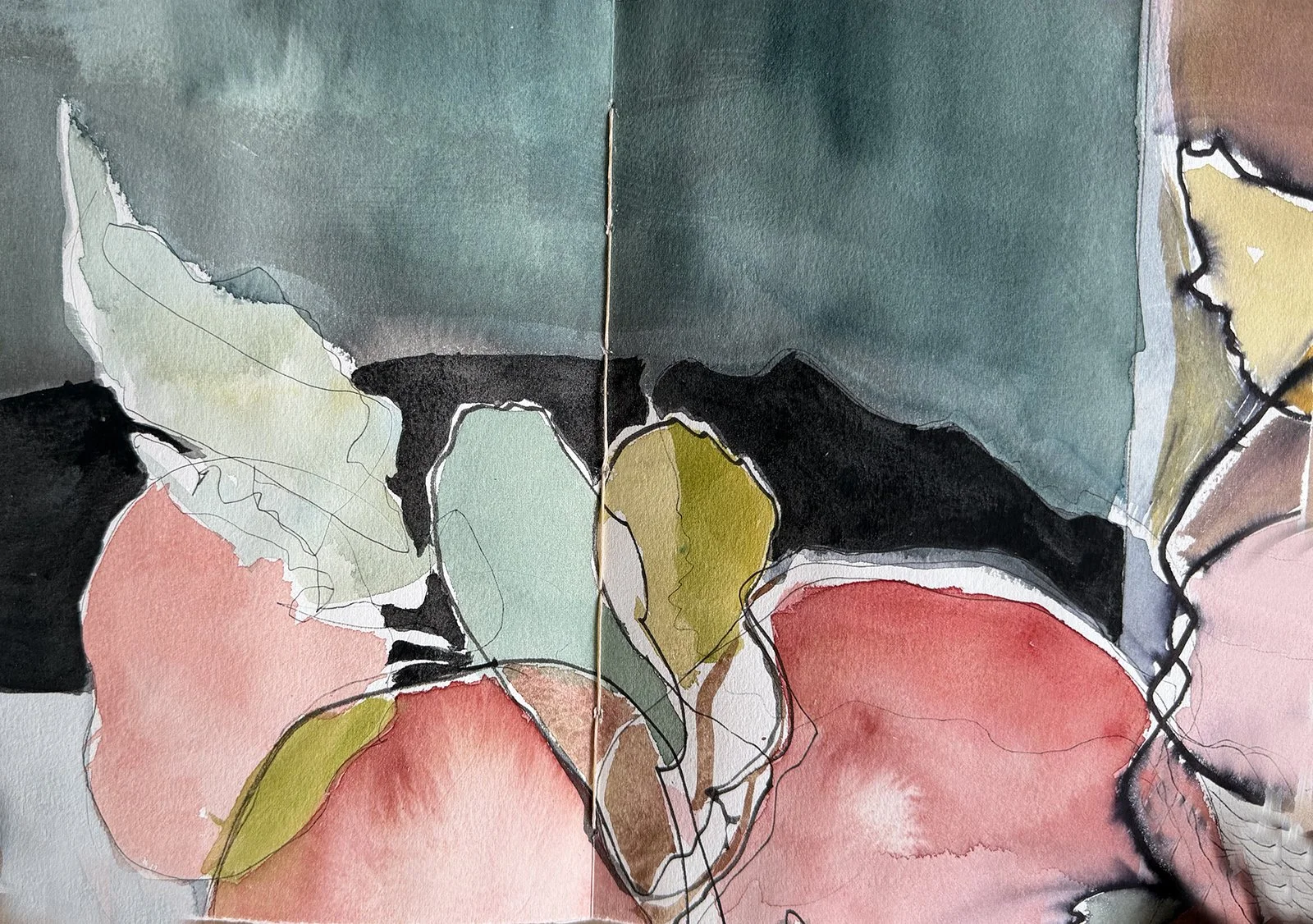
© Judith Bergerson
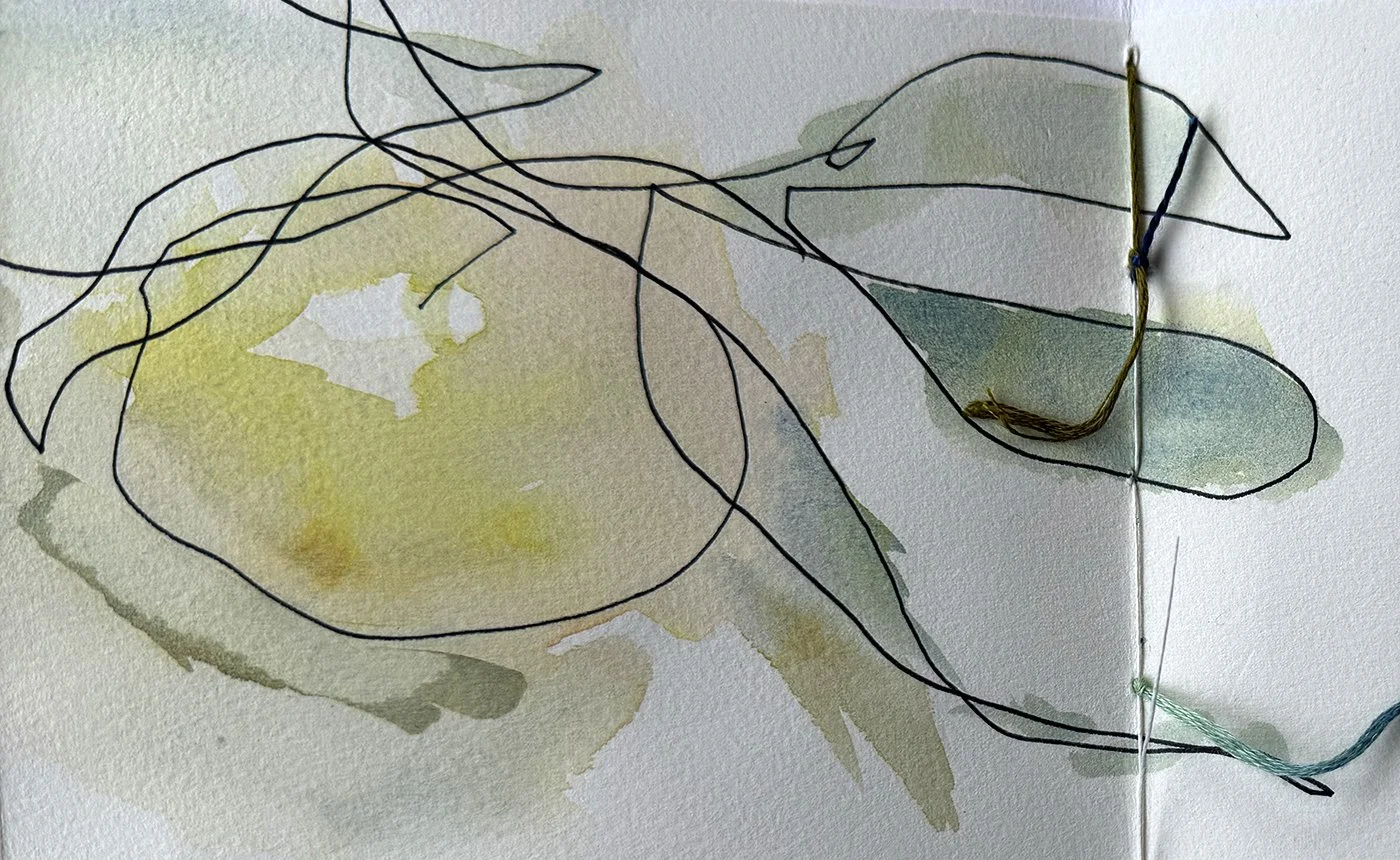
Blind contour pears © Millie Jackson
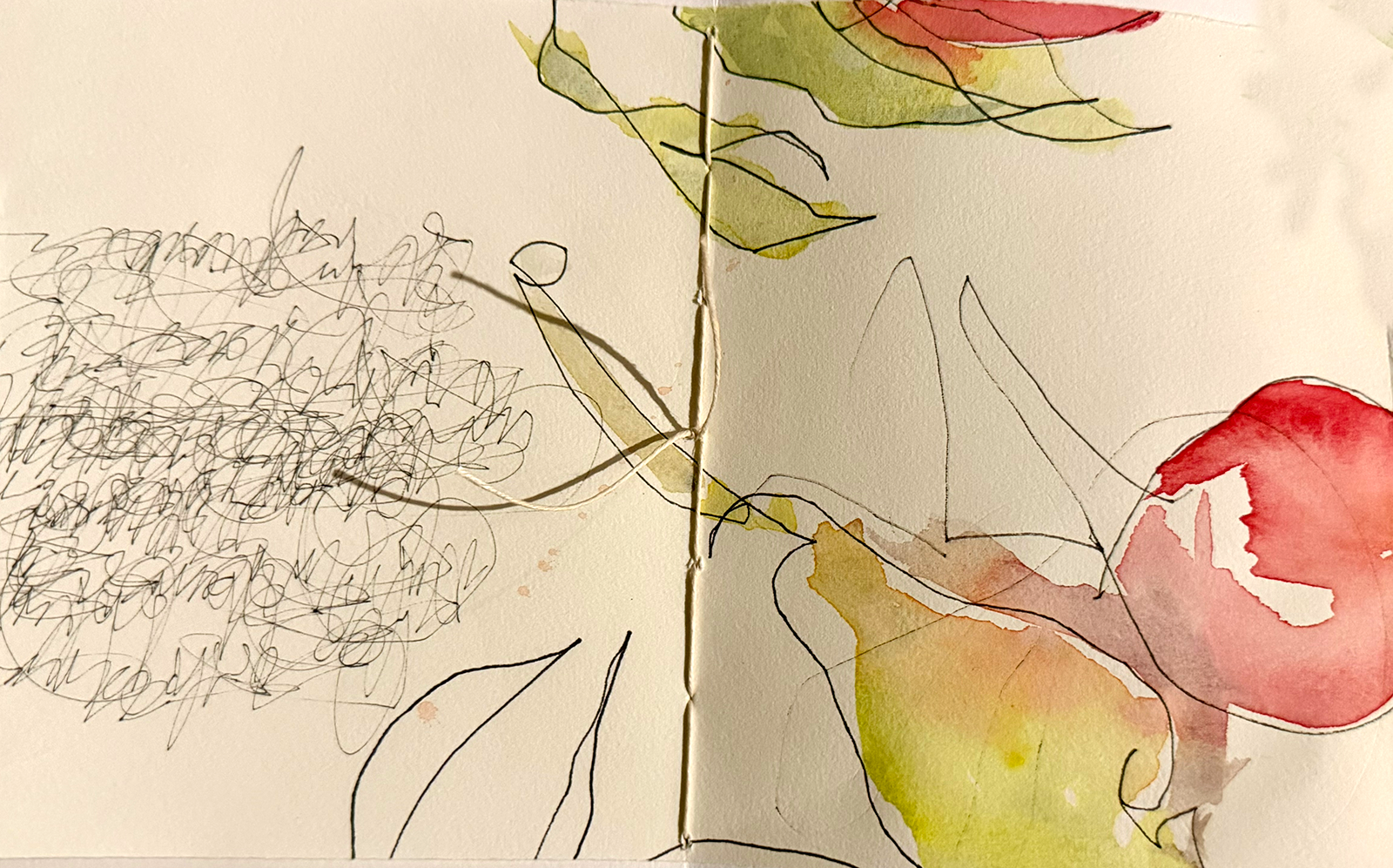
Blind contour drawing of pear and apple with “writing practice” | © Linney Wix
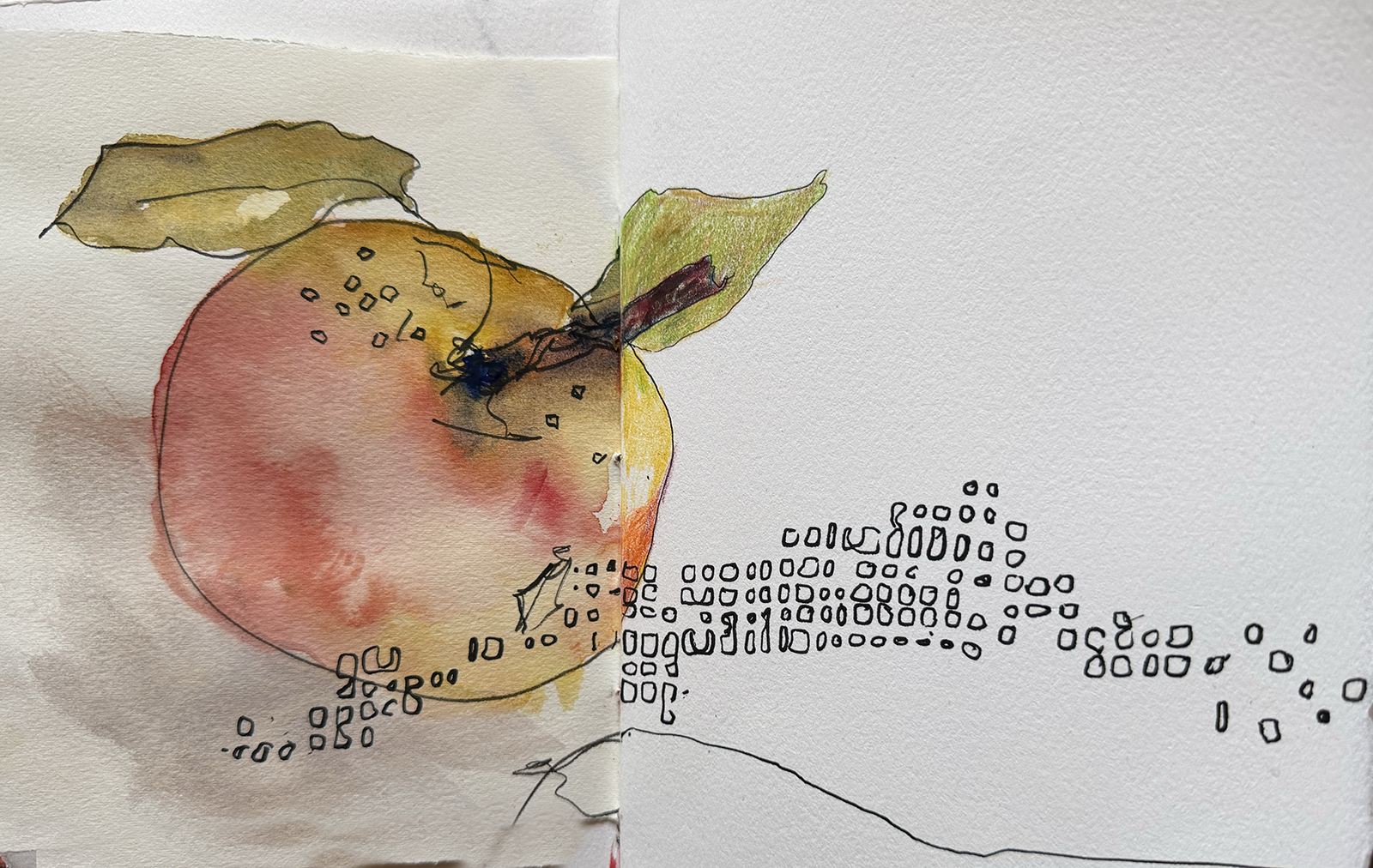
© Deanne Persson
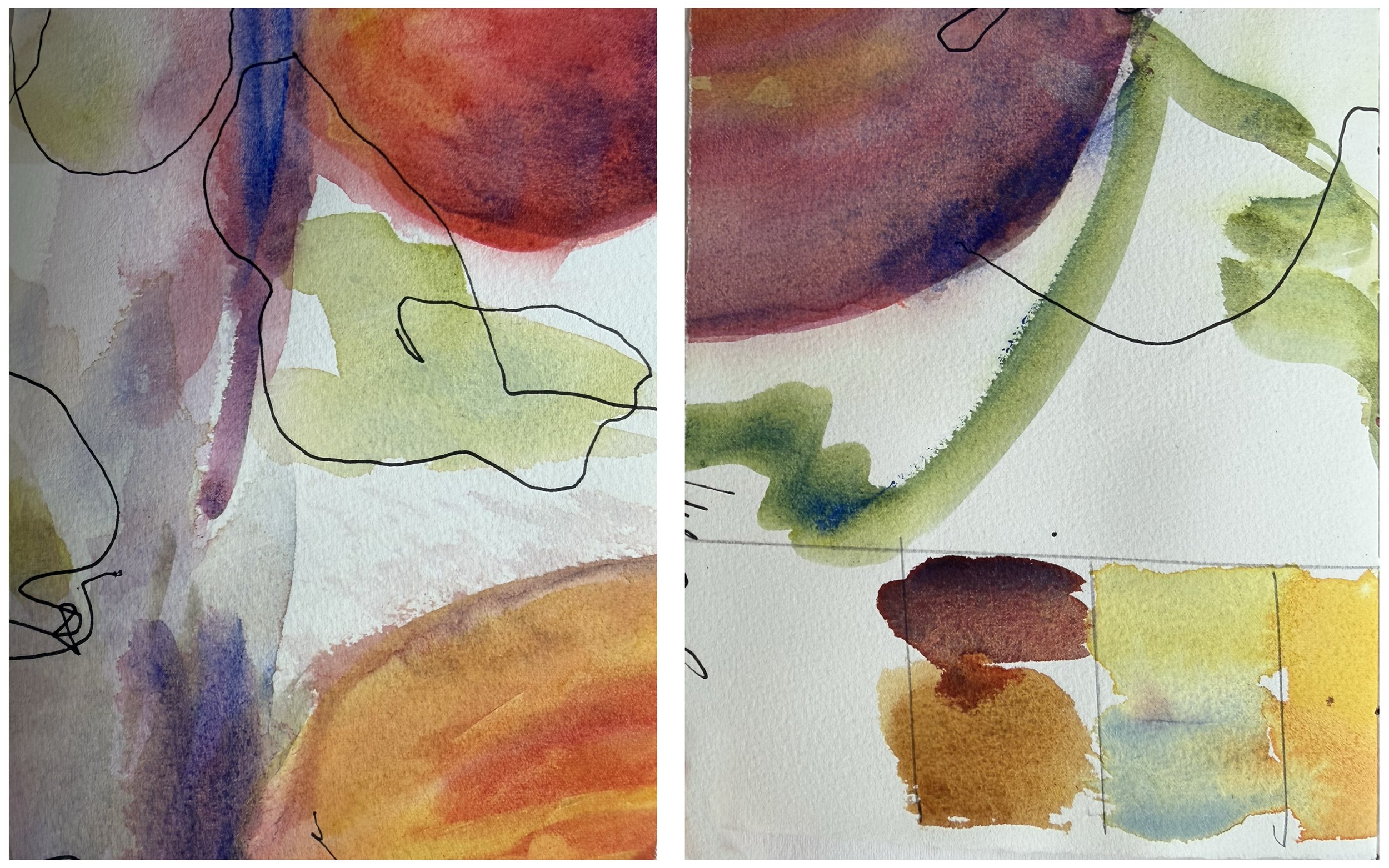
© Carol Vargas
Below is a video capturing the twilight on Madeline Island and student work:
* Maybe you can imagine my trepidation when Brother Martin handed me this beautiful ceramic bowl with his figure kneeling beneath the apple tree, a bird landing on his hand— and then asked me to letter around this masterpiece. The curve of the bowl gave my hand nowhere to land, so holding my brush in the air, I began. I had one chance only to do this, no second chance! So far I don’t think I have ruined any of his work. It is a serious pleasure and honor to work with him for our coming exhibit at Saint Meinrad Archabbey, October 23 2026.
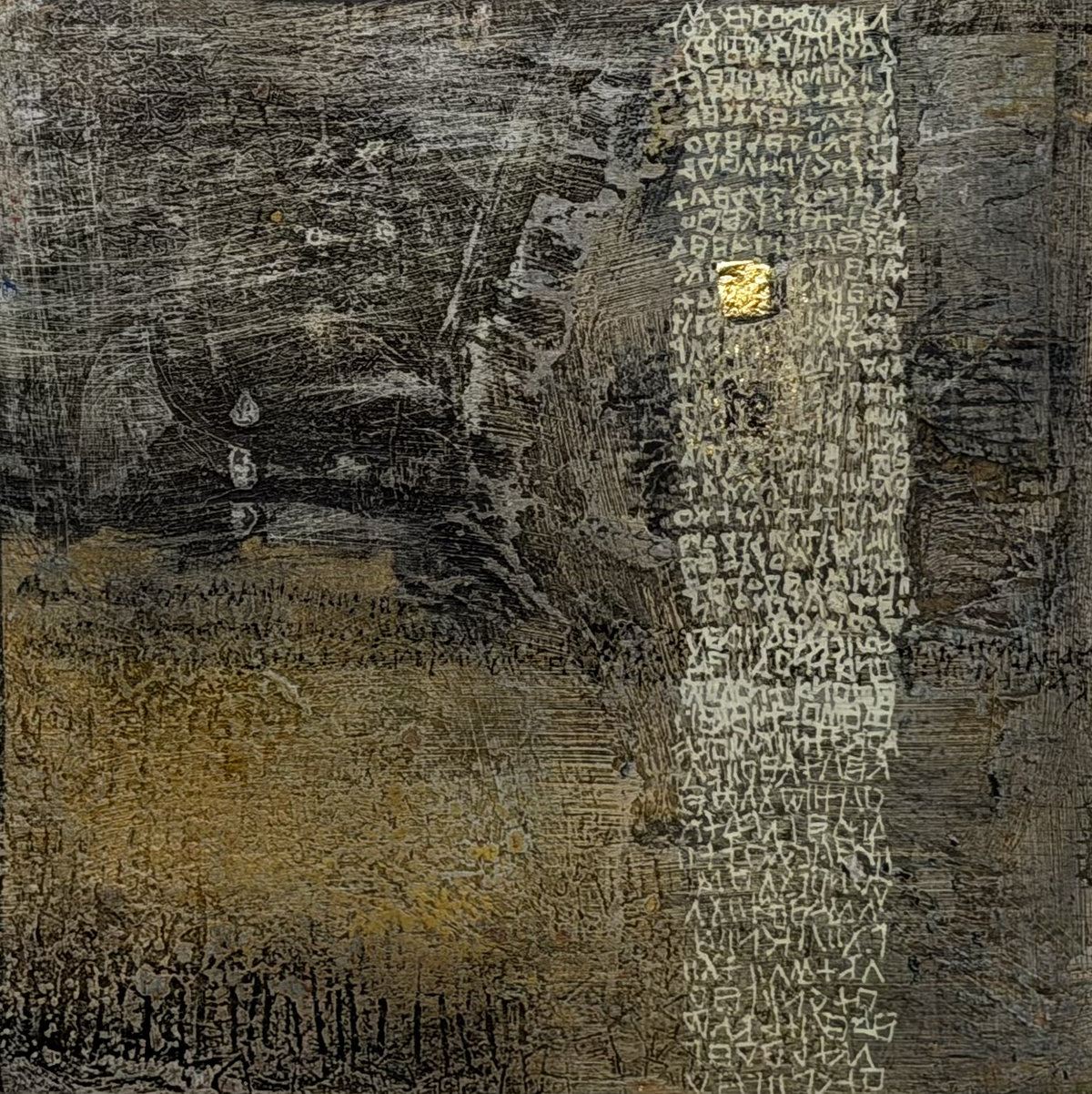
Painting in process | Oil and gold leaf | © Laurie Doctor
What is your net for catching days? I’d love to hear from you.
This months featured artist is Scott Soeder. He is a children’s book illustrator, writer, graphic designer and musician. His work and creative play make me smile. I feel the joy. See more of his work here.
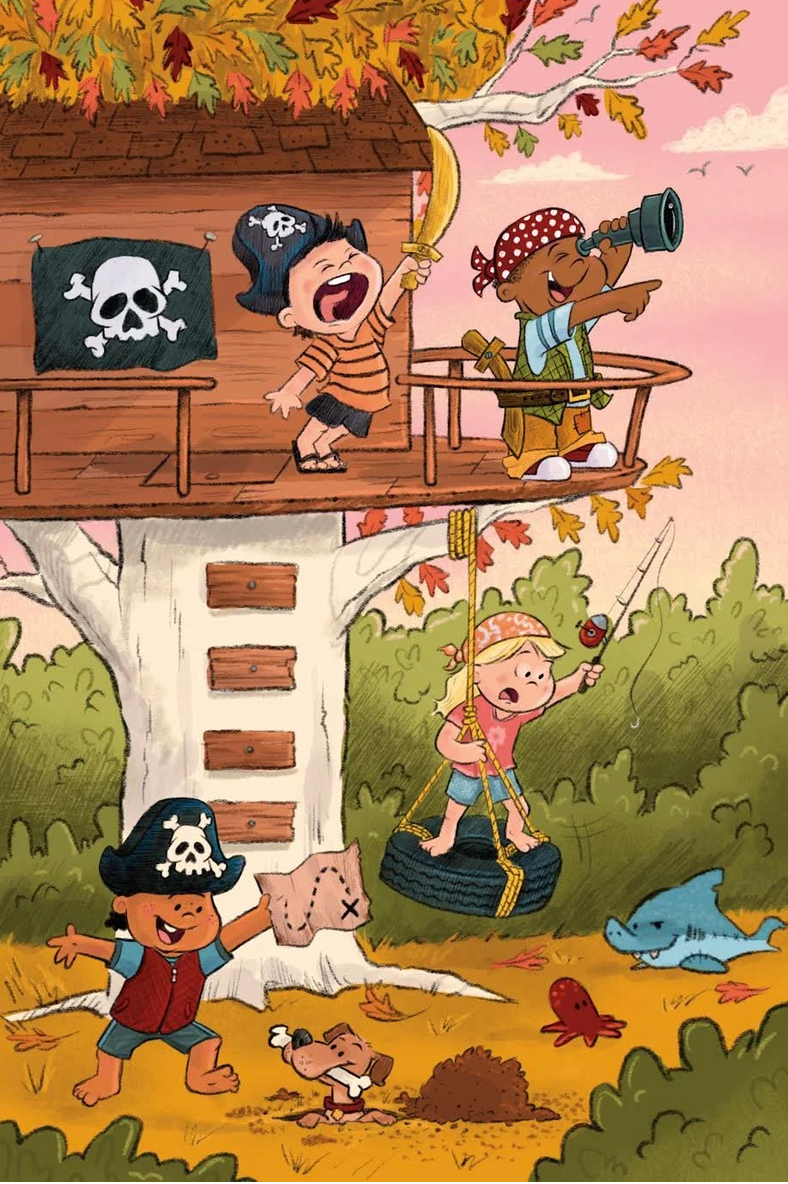
© Plunder and Play by Scott Soeder