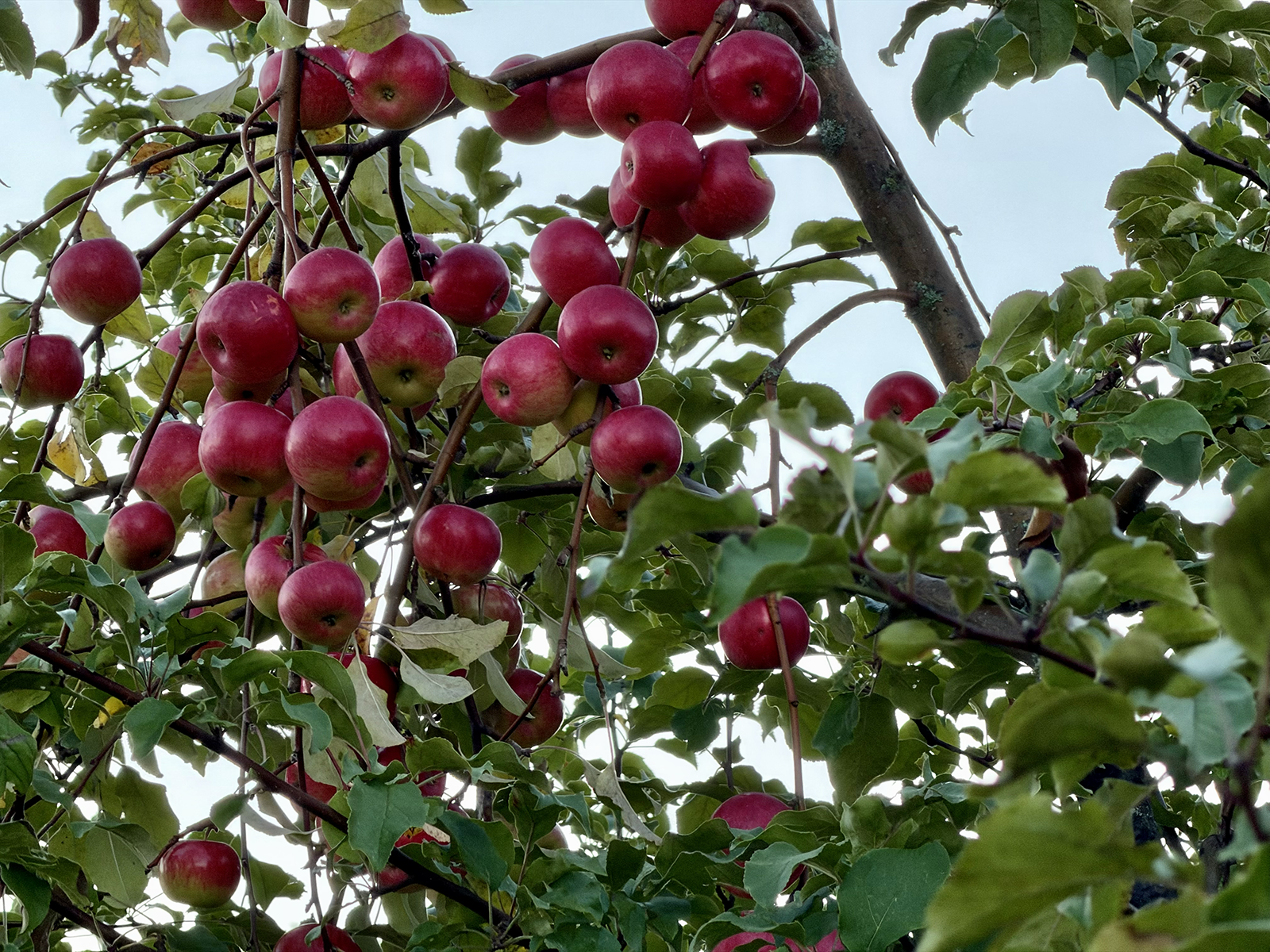
“A net for catching days”
More and more I have the sense of one day spinning into the next and the next— until now, this morning, summer’s gone, and it is the autumn equinox. For a brief moment days and nights are equal. For a brief moment I pause in the twilight. More and more I feel the need for a net, for the accountability of days filled with something that matters.
Up here on this small island called Madeline— named after Madeleine Cadotte, the daughter of an Ojibwe chief— the stars and even the milky way are visible. Last night the nearly full moon rose over the water. Immensity under the night sky and the vast silence re-ignite my desire to bow down before the miracle of being beneath this tower of darkness sprinkled with moonlight, to “labor with both hands at sections of time.”
How we spend our days is, of course, how we spend our lives.
What we do with this hour, and that one, is what we are doing.
A schedule defends from chaos and whim. It is a net for catching days.
It is a scaffolding on which a worker can stand and labor with both hands at sections of time.
— Annie Dillard

Where is your bliss station? You have to try to find it.
This morning I set aside my worry, ambition and anxiety and put on Van Morrison pleading See Me Through to begin time to play. The usefulness of having something as mundane as a routine is common knowledge, and sometimes the only way to regain footing; people often miss the fact that routine is integral to the creative process. Today I am reminding myself. Creativity requires structure. This last month my mind has been tumbling with the push of the world as well as my aims to finish my online class, complete work for exhibitions, develop in-person classes, painting, writing and keeping a garden alive in 100 degree heat. So what gets left out of my routine? The most important part— (besides dreams, prayer and meditation)— play.
Play is always a matter of context. It is not what we do but how we do it.
— Stephen Nachmanovitch, Free Play
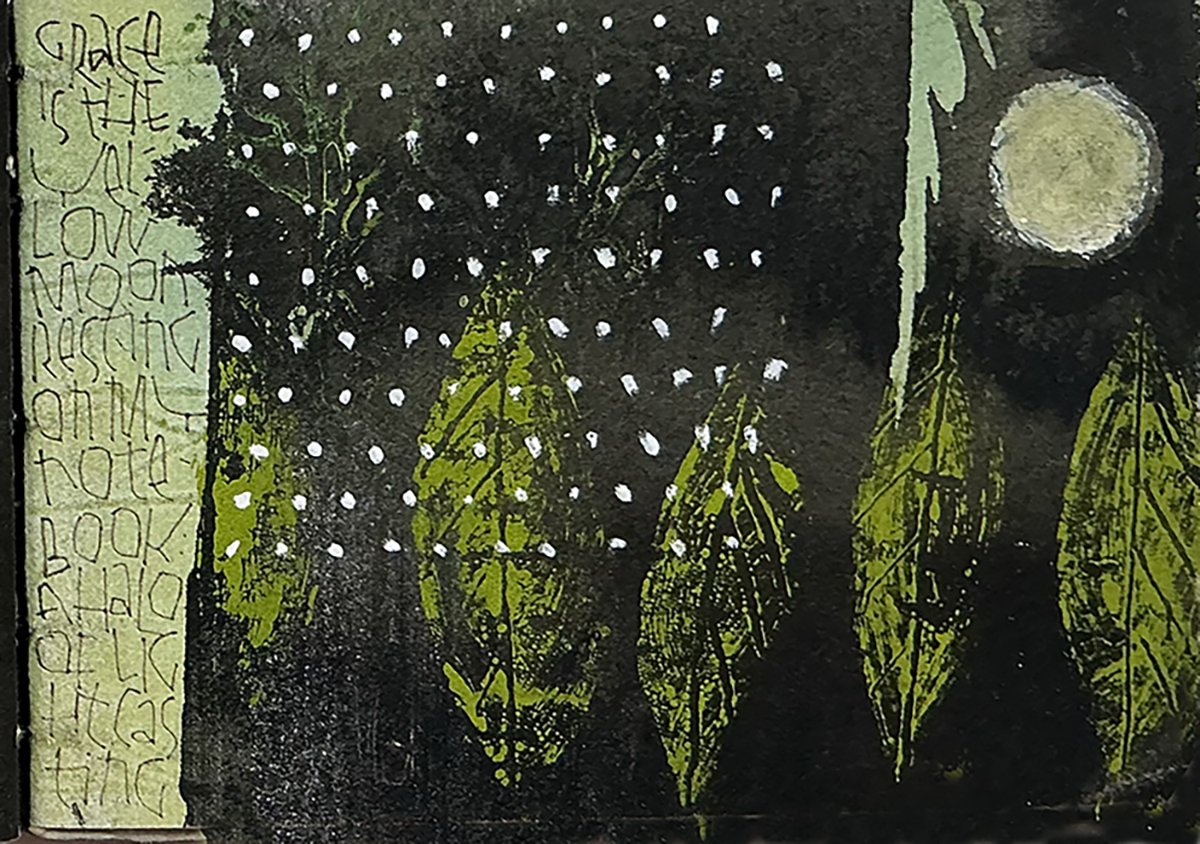
Ten dots in ten rows.
Last night I dreamed of dots in a row, ten dots in ten rows, evenly spaced. So simple. The feeling in the dream was one of order — and took me once again to the Greek story of Psyche faced with a roomful of seven kinds of seeds all mixed together, floor to high ceiling. Aphrodite grabbed her violently by the hair and threw her down on the ground and said: “Separate all these seeds— wheat, barley, poppy seeds, peas, lentils, and beans— into piles. Sort them by nightfall, or death.” This story remains resonant first of all because it illustrates that when we are overwhelmed what we are facing does seem impossible. It also reflects what happens in my studio: chaos to order, order to chaos — and is a reminder that chaos is necessary to order, to creation. (At least in my studio, breakthroughs to order happen often after many trials and much disorder). It also summons my courage in the face of being overwhelmed, as Psyche was, by what seems impossible but is resolved by help from an unexpected place.
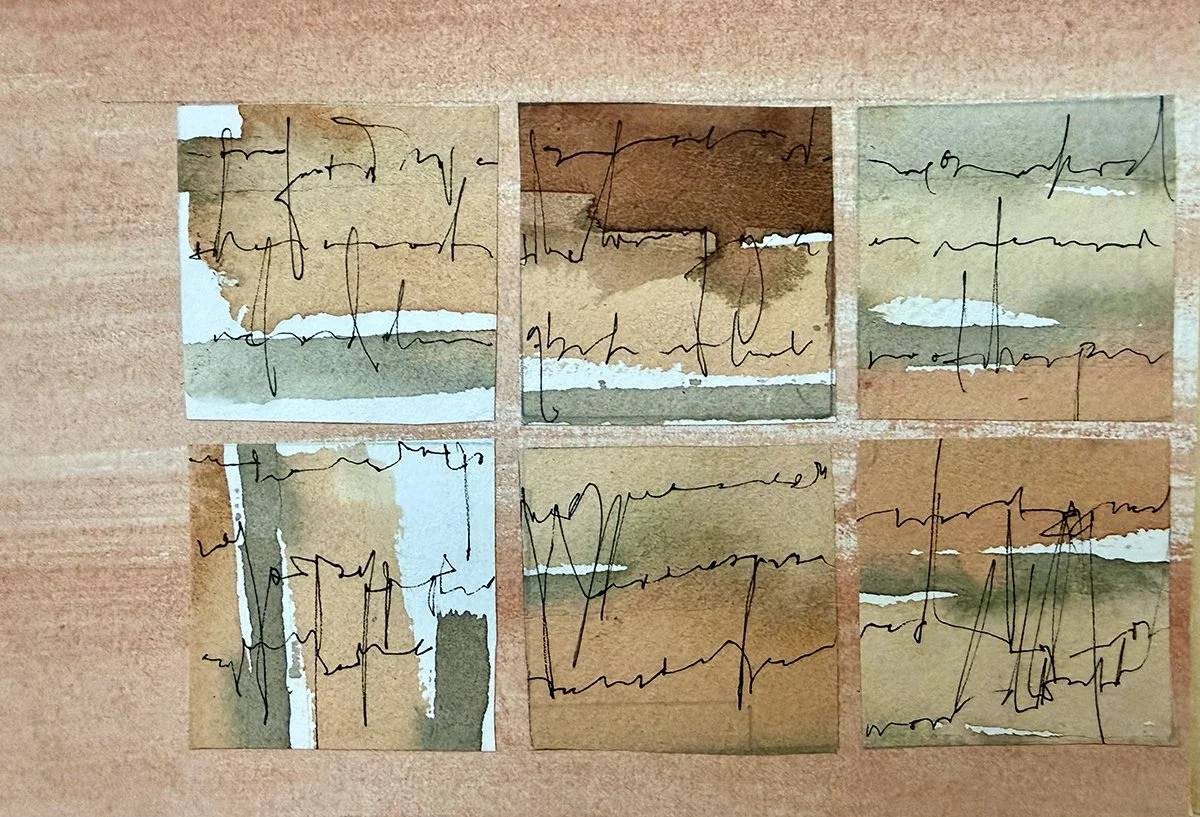
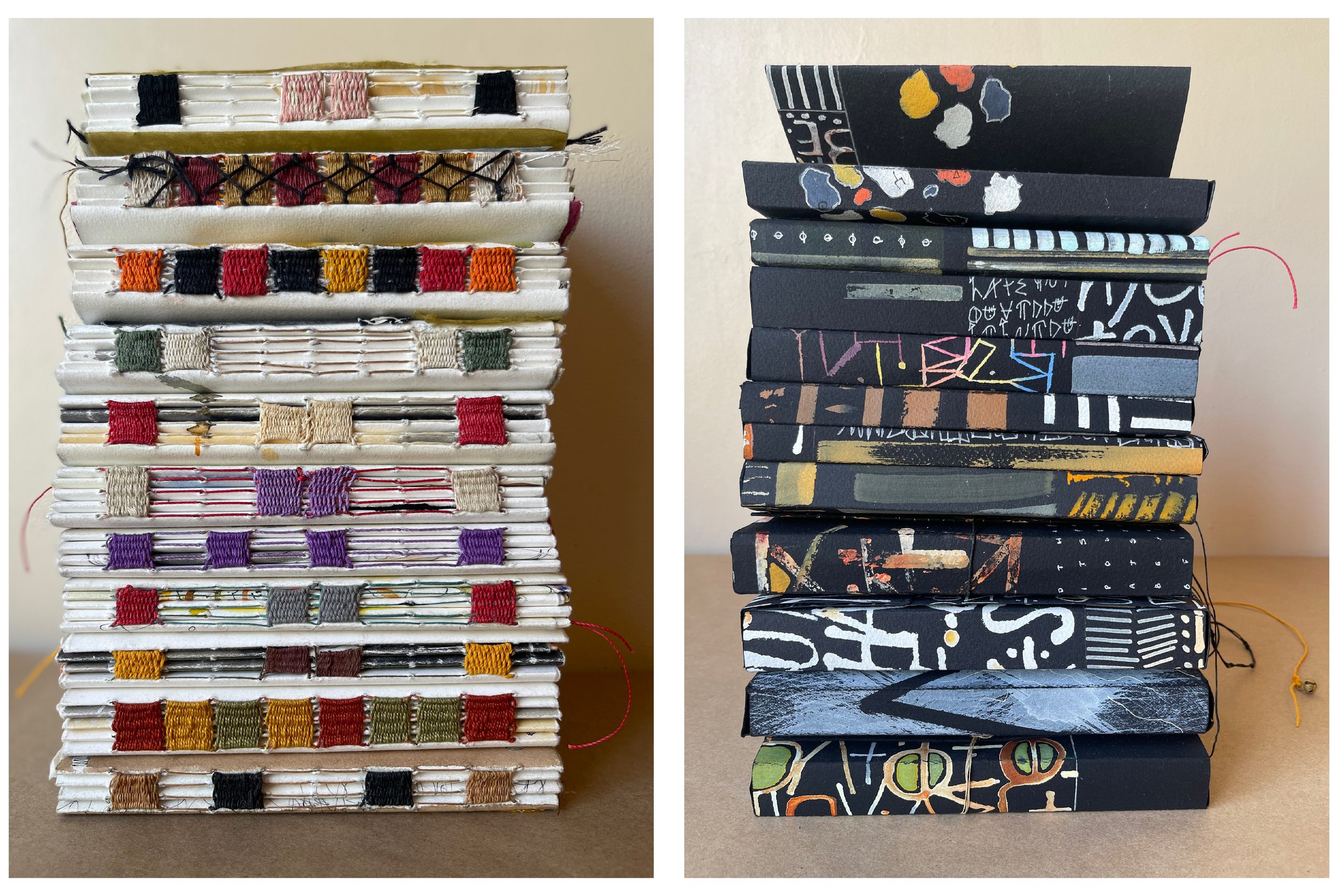
Each journal that I keep is some kind of record of this pattern— pages of chaos and columns of order:
I want my imagination back.
It’s easy to forget that even in this burning turning world, we are part of a vast imaginative field. Even in the midst of a multitude of transactions, all happening in spite of crisis and devastation, there are things that nourish the imagination, things that are out of reach of AI. I am thinking of poetry, dreams and reverie — all of which awaken imagination and creativity. Staying current with the dream world – where gift-images come unbidden and tell us something about what direction to walk in — can change everything, even the world.
Read & see images and video:
Habit of Twilight
Without watches or phones in the classroom we entered the twilight time before clocks, the kind of twilight that accompanies the muse, the kind we can wrap around us indoors and leave the world to take care of itself for awhile. The reference to twilight comes from that in-between liminal feeling in the landscape at dusk, the gloaming hour when the other animals begin stirring, when, in all the stories, the elves and fairies begin their dance. But what is a habit of twilight?
A habit is defined as a settled tendency or practice, an acquired mode of behavior. What a thought, to acquire twilight as a habit…and then I realized that a habit is also something you wear; a long, loose garment worn by a person of a religious order or congregation. The idea of wearing a habit of twilight has taken hold as something I reach for; a cloak of twilight. I love seeing what happens when this atmosphere is in the classroom. As always, I can only give you a glimpse — here are a few of the book pages:

“Remake Your World With Words”
Winter Solstice, the darkest night of the year, returns me to the theme of stars, night, silence and time. This painting was inspired by Gregory Orr, from one of his many untitled poems in Concerning the Book Which is the Body of the Beloved. Any of you, if you have written for long periods of time, know the power of words to create a spell.
Let’s remake the world with words.
Not frivolously, nor
To hide from what we fear,
But with a purpose.
Copses Speak
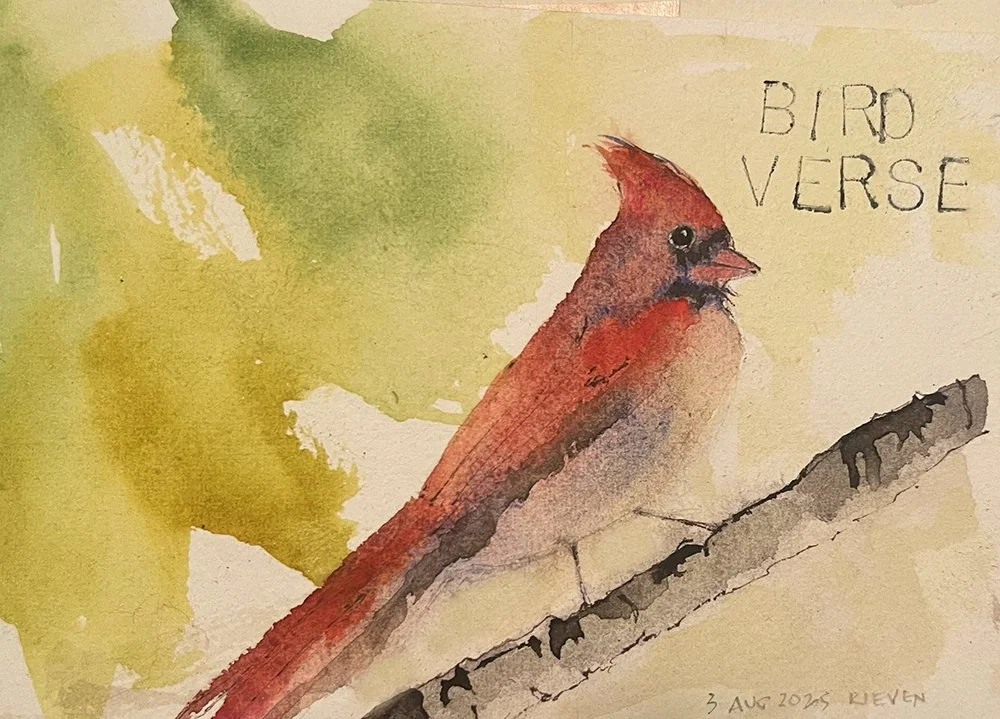
The outcome isn’t up to us. Even so, I persist in believing that moving into the moment, and away from managing it, changes everything that is going to happen: I see a left turn that wasn’t there before, a hummingbird arrives out of clear air hovering close to my cheek, a single yellow leaf floats in slow motion down to the ground. It helps to befriend boredom. Patience joins time to eternity, says our Kentucky poet, Wendell Berry.
I try to remember this when I am struggling with a painting, impatient with what I see. Who do I think I am to assume for the canvas what is next? There is even some relief in knowing the outcome is not up to me. The solace is in part due to remembering that there are prompts in the air, always there. As now, when I just stop and listen, my hand is prompted with words that unearth what is holy in every unfinished mess — all the falling piles of paper burdened with words that have lost their way. And I know, or at least my hands know, that when I find the lost words they lead me right back to you.

Pleached Hornbeam
This morning I woke up with a word, well two words I had come across in my reading: pleached hornbeam. Hornbeam struck me because I have a Hornbeam tree growing outside the kitchen window, and it sounds like a tree out of Lord of the Rings. Pleached because I didn’t know what it meant. Some of you gardeners may know that the verb pleach means to braid, to interweave — mostly with vines or branches. It can mean to make or renew by interweaving. Make an arbor, a new way through. After an unusually long time away from home I have returned to the chaos of undone things and the dust and tumble of remaking a 60’s bathroom. I find pleach to be the perfect word…How do I interweave where I have just come from — New Mexico, Chicago, Rhode Island, New York and Colorado — with home here in Kentucky? Pleach can also refer to making a fence. Oh yes, I need to braid the experience of a month long odyssey into a fence, and weave a border around my wandering mind.
As for hornbeam, the reference to horn goes back to the idea of a wind instrument. Now my imagination opens to the obvious — that this tree is an instrument of the wind. It reaches down into the earth and up into the sky, making leaf-branch music, reaching so far into the heavens that another reference to horn is one tip of the crescent moon. This tree music, now touching the moon, calls in the second word beam, as in ray of light. Horn-beam.

“Impatience is an argument with reality.”
“Impatience is an argument with reality. There are no shortcuts.” The shortcut is just a trick of the mind. It was Mark Twain who apologized for writing a long letter saying he didn’t have time to write a short one. It takes a long while to find the just the right words to make writing concise. We have ample reasons for argument with reality, and endless opportunities for impatience. How do I gain the clarity to decide what deserves my attention?
One complaint against “reality” is the absence of leisure. Where is the time free from demands, entertainment, news and distraction? Is something always on? The computer, the phone, the TV, those blue lights on the stove? We have a romantic notion of the past, when there was time for lying in the grass, swinging in a hammock, watching the clouds. The experience of the awesome immensity of a night sky filled with stars, or the surprise of a shooting star stirs the soul and settles the mind. Doubt, agitation, and anxiety cannot co-exist with gazing and immensity. The leisure of gazing — whether it is the night sky or the whole-hearted attention given to someone or something you draw — is in itself enough, and carries the joy of losing oneself in noticing, in beholding.
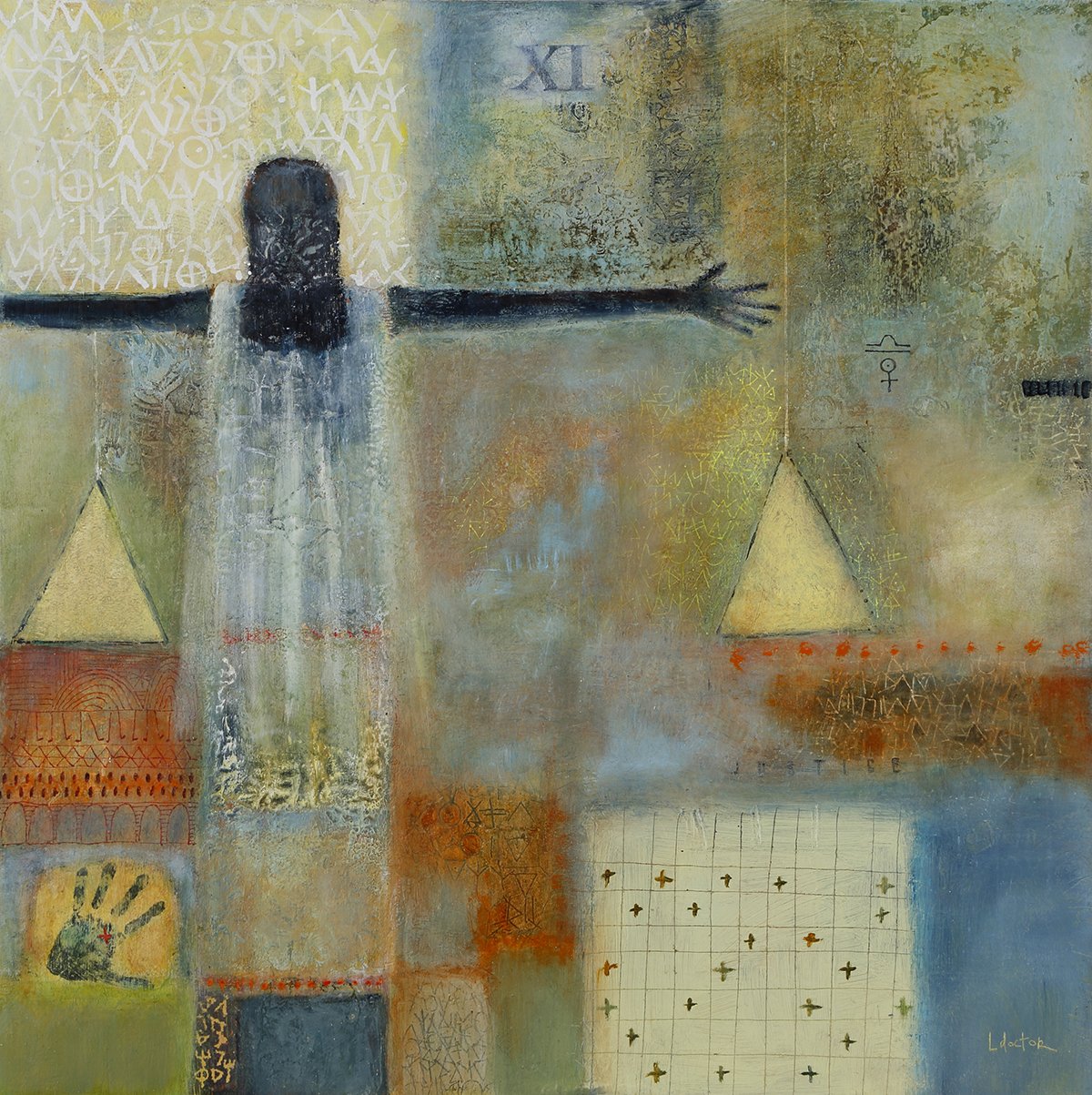
The World Depends on Our Participation
Oh joy, oh grief
oh sister-shifting-sands
where shall I stand?
And you say:
sit here
take my hand.
–Laurie Doctor
I had a different beginning to this post, but this morning I first want to acknowledge the grief in this world. It is easy for me to feel overwhelmed and at a loss for what to do. I remind myself that there are many ways to participate. We all need water and food, and beauty. I return to the resilience that comes from the practice of making, the resilience needed to restore hope. As makers our calling is to bring our focus close in, to repair the part of the world we can taste, see, hear, smell and touch. As makers, we are called to hold vision for the world, no matter the circumstance. So much is required of us now.