Featured Artist | May 2026
Laura Marshall
Tell us about your practice as a maker.
© Laura Marshall
When I make a drawing, or a clay sculpture, or a poem, I often reflect on the words of Maria Martinez, the wonderful Pueblo ceramic artist who lived from 1887-1990. She once said that sometimes when she was working, she could sense visitations by subtle energies or presences. As she felt them circling around her heart, it seemed to her that they wanted to be born into the world, so she gave them a place to live in patterns she painted on her pots. Once she had done so, she sensed a quiet fulfillment from them. I often “get an idea” to make something. Sometimes ideas arrive as a stirring in my heart, or as an image that remains from some fleeting impression. They grow in my mind, and continue to grow as I draw, or knit a shawl, or play a melody on my cello—even ones that were composed over 300 years ago! Perhaps those melodies were visitations to another person’s heart, and through the wonder of having been written down, I can play them today, and share in that long ago visitation.The poets and philosophers of ancient Greece, living at the edge of literate and non-literate culture, had a word for the call and response between our hearts and the world. They called it philos. Philos is a kind of love—not a grandiose or heroic love, but rather a sort of domestic affection for and affinity with the particulars of this world. Several pages of my Greek-English Lexicon, which was first published in 1843 by Henry Liddell and Robert Scott, are covered with dense columns of tiny printed words in both Greek and English, all of which share the same prefix: philos. In addition to philosophia—the love of wisdom and learning—there is philombrios, the love of rain; philozephyr, the love of the west wind; philokissoporos, loving to wear ivy; philornithia, the love of birds. This compendium of affinities encompasses the love of grottoes, of wine, of choral singing, of divination, of money, of arguing. James Hillman called philos an “arising in the heart” that we can recognize in those moments of aesthetic arrest, of indrawn breath at the sight something beautiful. Surely our own affinities can be added to that old list of Greek words. We can name our own loves for the things of this world, and for the qualities they hold like clay vessels filled with dark, sweet water. We can add the way we know and understand other people through their affinities and affections: my mother loved roses; my grandmother, who was born in Santa Fe, loved the stillness of mountains; my father loved to talk late into the night, and he wept when he heard Frank Sinatra sing.
How do you begin a piece?
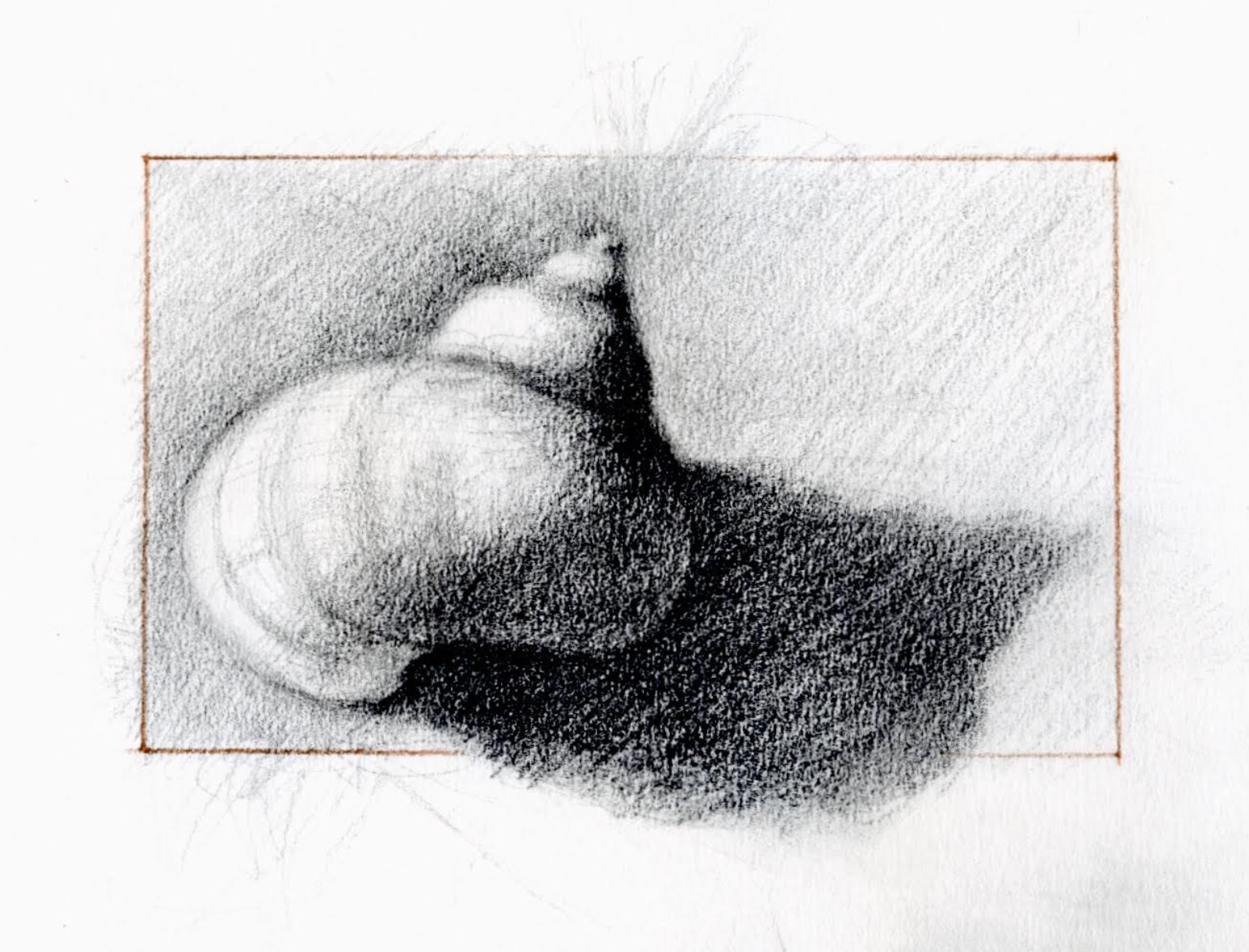
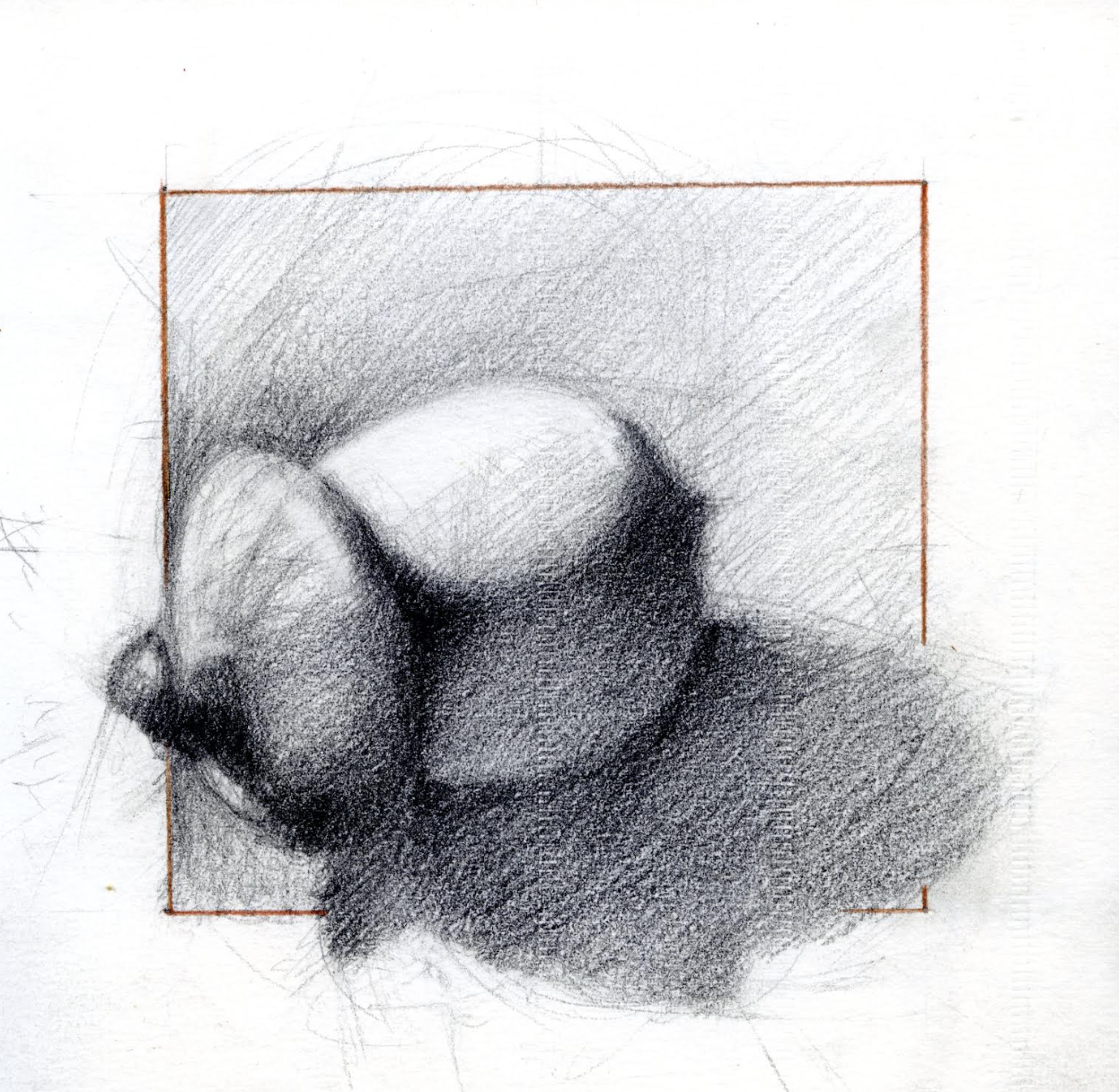
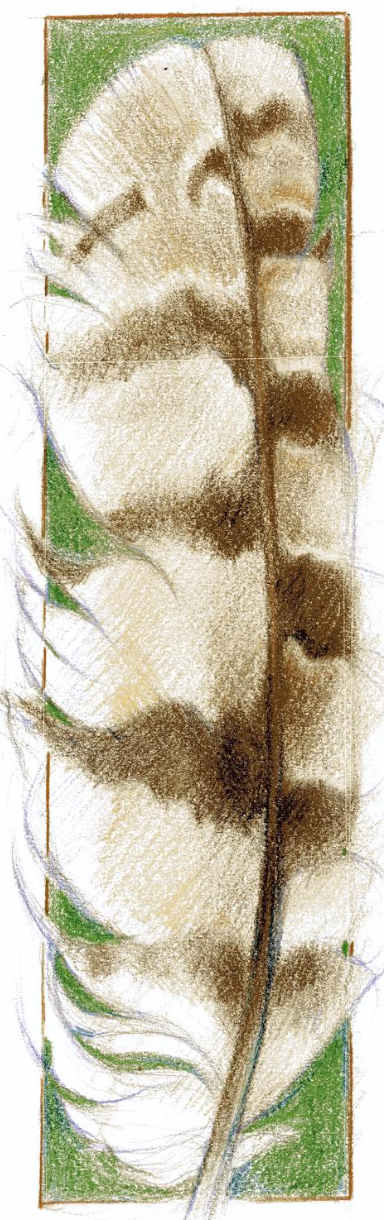
My drawings often begin with a spark of philos. I remember the moment I encountered an acorn at the edge of a muddy path in central France, seeing how it shone with rain that had fallen during the night. I picked it up and carried it all the way back to my drawing table in the dry, bright, altitude of Colorado, where it became a treasure that continues to invite me to savor the sweet roundness of its shape, and the weave of light and dark that reveals that sweetness. The eyes of philos discern stories curled within the heart of things—like the intricate radiance of spiraling sea shell remembers the ocean tides and currents that birthed it. Or the story of wind imprinted on a hawk’s feather, making visible its own affinity for the invisible currents of the winds that shaped it. Visitations from the world are a perennial current of grace, which I receive by doing my best to see things as they are, to see the way an acorn is just so, is simply and only what it is without pretense or contrivance. The curl of a squirrel’s tail, or the undulating edges of a leaf whose name I do not know are just this. So many things gather and meet when we are making things: attention, noticing, responding, giving away, joining in. For me, being an artist is to honor the beings of this world by hearkening, responding, and opening to the circulating currents that flow through us and the world.
© Laura Marshall
Where do your ideas come from?
Where do the ideas for things we make come from? Perhaps what I am calling “my ideas” come from the world, and by assuming that they are mine, and that they started with me, I am appropriating what are actually invitations to join the marvelous feast of being that is this world. Perhaps both our hearts and the world are far more porous than we suspect, and in fact the source of ideas lies at the shimmering threshold between our hearts and the world. Everything alive is beckoning to us, often as quietly as the whisper of a geranium asking for water, and sometimes as insistently as a dream that must be told. The promptings that arrive from the world attest to the ceaseless living currents flowing between us and the world, especially through our hearts and hands.Who/what influences you?
My influences, my sources of inspiration, courage, and nourishment include:
Giotto, Rembrandt, Kathe Kollwitz, Cézanne, Emily Carr, Wolf Kahn, Norman Ackroyd, Andy Goldsworthy; Dogen; Saint Francis of Assisi; Rumi; Andrei Rublev; Hildegard of Bingen; Shang Dynasty bronze vessels; Incan feather capes; Islamic patterns; the cello playing of Anja Lechner, and that of Abel Selaocoe; the films of Andrei Tarkovsky; Gothic Cathedrals. Rewilding projects throughout the world. The Yi Jing. Green Tara.
What is one intention you have for your practice this year?
The central question I am working to meet right now is this: what are artists to do in the face of the Great Mater of our time—the changing climate? I am gathering my reflections in a book entitled The Intimate Eye: Drawing from Life as a Contemplative Practice.Give yourself a feast and see volumes more work from Laura click here.
© Laura Marshall